Shetland Islands Wildlife and Travel
Recently back from our first trip to the Shetlands, one of the few areas in Scotland we had not yet covered. Why Shetlands – well , we had not been there plus a great area for wildlife so what’s on offer?
While the Shetland Islands group contains many islands most are small and many uninhabited. The main islands we covered were Mainland, Yell, Fetlar, Unst, Bressay, Noss and Mousa.
Being interested in wildlife and photography, the areas we covered targeted our very loose agenda:
- Photograph otters
- Close views of Gannets and Puffins
- See Storm petrels and Red necked Phalarope.
- As always, identify good overnight spots
- Keep the dogs happy – lots of nice walks.
Getting There
As there is only one operator running ferries to the Shetland Islands, options for taking motorhomes are limited. Basically there are two choices:
- Ferry from Aberdeen to Lerwick. Ferries from Aberdeen run over night, departing at 19:00, and on alternate days run direct to Shetlands. The journey takes approximately 12.5 hours with a choice of on board accommodation:
- Choice of private cabins for 2 at about £100 each way.
- Berth in shared cabin starting at about £30.
- Sleeper seat – these can be booked free for those booking travel with most vehicles.
Motorhomes are charged from £101.40 – £136.20 up to 6m with a supplement from £11.00 – £16.20 per metre. Adult passengers £24.90 – £38.10 all depending on season. So not a cheap trip.
- Ferry from Orkney. On alternate nights and weekend the Aberdeen – Lerwick ferry departs at 17:00 stopping off at Kirkwall on the Orkneys. This provides the opportunity to make alternative arrangement for travelling to the Orkneys and picking up the ferry at Kirkwall for a shorter trip, approximately 7.25 hours to Lerwick. A number of operators run ferries to the Orkneys, but the quickest is operated by Pentland Ferries from Gills Bay, only takes 1 hour. Motorhomes on this ferry will cost from £33 – £83 depending on size and larger vehicles including motorhomes are reversed onto ferry. Passengers are £14, all pricing approximate as of July 2012.
Travel
Most of the roads on main islands, particularly Mainland and Yell are well maintained and probably of a better general standard than those in many parts of the Scottish Highlands. The majority of main links through the mainland and Yell are good A class roads, but even the single track roads are of a good standard with passing places being well placed. Roads tend to be quiet and, as a footnote, Shetland drivers are amongst the most patient and courteous we have encountered often giving way to a MH, but of course, don’t take this for granted.
Local Ferries
Local Ferries are primarily operated by Shetland council offering a frequent and good quality service to all main islands. In all instances of using ferries we were able to simply turn up and travel on the first available ferry with no booking being required even with our 7 metre MH. Cost of ferry travel was good value. A ferry from Mainland to Yell or Bressay came in at under £15 return for MH, driver and 1 passenger. The official position on charging for motorhomes is not clear but Shetland council web site indicates that Motorhomes over 5.5 metres may be charged at the lower commercial rate, although we found on all trips our MH was charged as a car. One other bonus is that ferry travel from Yell to some outer islands is free.
Boarding ferries with a motorhome having a long overhang can be an issue. Our MH is a prime example; one reason for us having air assisted suspension is to avoid issues on Calmac ferries which we use frequently. No problem on any of the Shetland ferries we used. Generally these are RoRo ferries and a delight to board with no need to raise suspension.
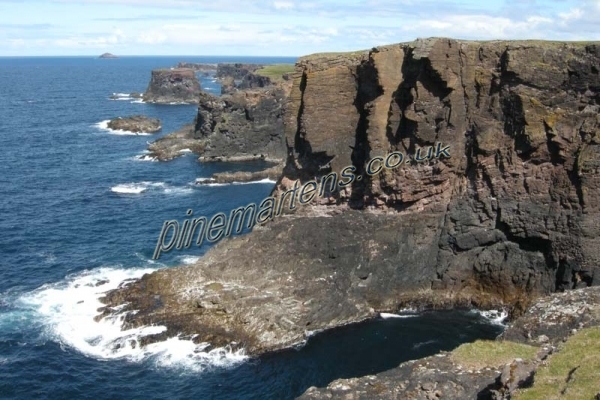
Eshaness Shetland
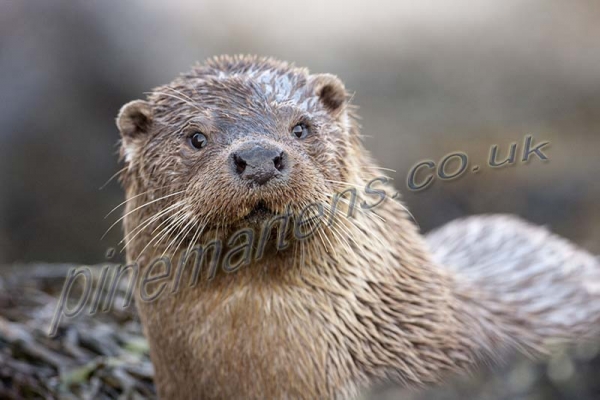
Otter Shetlands
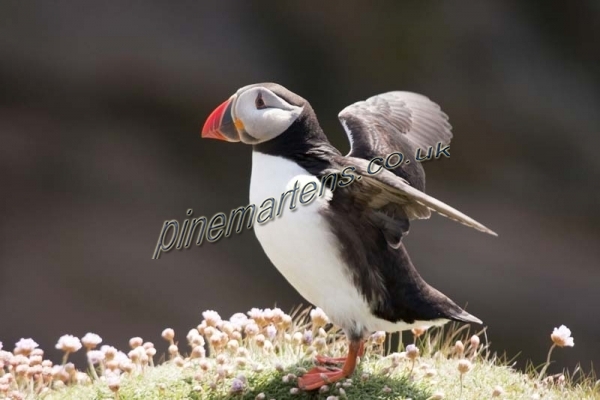
Puffin Sumburgh
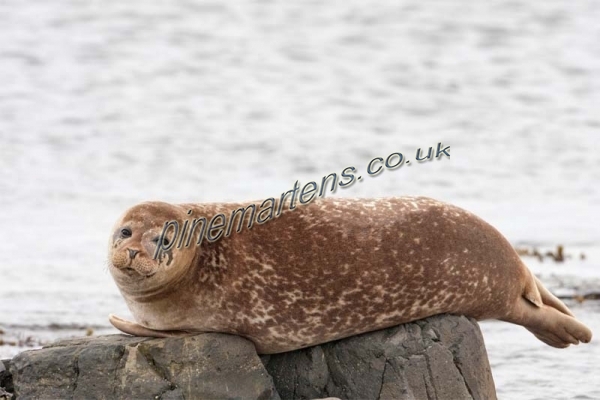
Seal Shetlands
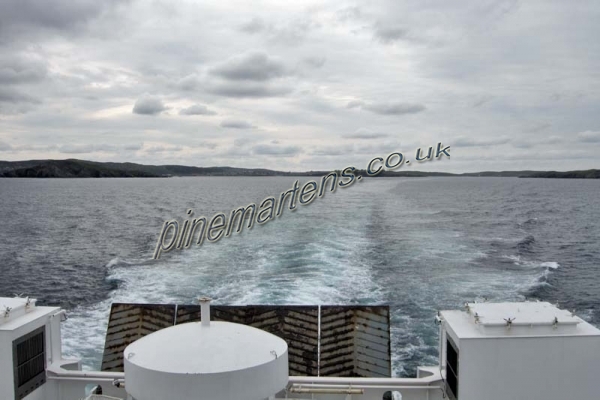
Shetlands Ferry
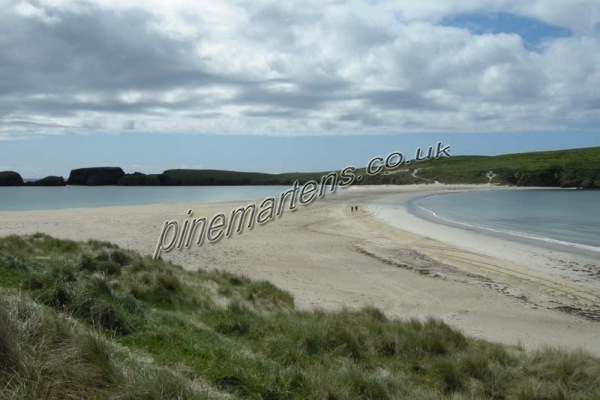
St Ninians Shetlands
If you are used to travelling with a laptop, don’t assume that internet connections will not be available in this far flung region. As part of a plan to develop communications Shetland council offers Free Wi-Fi, yes Wi-Fi, at many ferry terminals, so catching up on news and email is easy.
Facilities for travelling with dogs are limited. Dogs can either be left in vehicle for the duration of the journey or, for a small charge, in a kennel. If kennelled, limited access is available for dogs to the outer deck.
Overnight parking
The Shetland isles does offer opportunities for wild camping with a motorhome, but don’t go with the idea that scope for wild camping is vast, you will be disappointed.
Given that crofting and sheep farming are widespread on main islands naturally limits parking locations and vehicular access in many areas. For example you will find that rather than ending at a car park most small roads will terminate at a croft or farm. Unless you are travelling in a small camper van camping opportunities come in four forms:
- Road car parks and lay-bys. Some main A roads on mainland and Yell do have some excellent lay-bys and car park. A few of these offering excellent viewpoints and access to costal walks. Additionally many bus stop pick up points at major junctions provide car parks which allow those living in remote communities to park and ride. Some of these are sufficiently large to allow occasional overnight parking without causing locals any inconvenience.
- Campsites – Most of the campsites on the Shetlands are community run providing facilities at local community centres or Marinas. This is not by any means a bad thing and some of the facilities provided are very good value at around £10.00pn. Our favourite in terms of location and facilities was Burravoe Marina on Yell, although we did not stop the night, but did take a shower making use of facilities and happily left a donation in one of the boxes. Common practice in many of these community sites.
- Harbours and Ferry terminals – not to be overlooked. The Shetlands has many and varied harbours and ferry terminals. Some of these provide good access to wildlife in addition to opportunities for overnight parking.
- Wild camping location. Varies greatly, although there is much to see in the Shetlands many local attractions have limited parking and given the level of farming many off road locations are attached to a croft or farm.
While Shetlands have a limited number of campsites, caravanning is popular so don’t be surprised to find many of the best spots to be occupied by caravans during the summer months. This applies to all types of locations including wild.
Shetland attractions
Covered well by Shetland tourism web site (http://visit.shetland.org/) and Shetland heritage (http://www.shetland-heritage.co.uk/) which provides some excellent downloads covering all aspects of attractions, walks and wildlife. The material available on these two sites should be sufficient to provide the required information.
If you are looking for some of Shetland beaches you might want to check out:
- St Ninians Bay
- Sand of Meal
- Norwick Beach
Walking and dogs
Shetland offers many opportunities for walks. Information on most the popular walks being available through the Shetland Heritage web site. If you do take a dog to the Shetlands, please be aware that many of the walks include areas holding live stock particularly sheep farming. Some of these areas expressly deter access to dogs, even those on leads. If you have a particularly active dog that is used to walking off lead you are likely to find good walking opportunities limited even if your dog is well behaved and used to live stock. One of the best areas for walks in Shetland is Eshaness which combines spectacular scenery and wildlife. If travelling to the Shetlands with your dog make Tesco Lerwick your first and last stop when boarding/disembarking the ferry. Only 5 minutes from the ferry terminal and directly opposite Tesco is a nice little car park on the shore to allow your dog a little exercise and good spot for seals to boot.
Wildlife
Chances are if you are going to the Shetlands you will have at least some interest in catching some of the wildlife.
Being the northernmost end of the UK birdlife is of course one of the main attraction in the Shetlands and most of the areas of interest are covered well by the area leaflets provide on the Shetland Heritage web site.
Of the areas we visited those not to be missed would include:
- Sumburgh Head – strictly for the birds, well not totally as this is also a good spot for whales and dolphins.
- Noss for close encounters with Puffins and Gannets in particular. Of all puffin sites visited in the UK this site provided the best views. Here you can literarily sit amongst the puffins.
- Mousa – Late evening trip for Storm petrol a fabulous experience, especially on a good cloudy night. Be aware that availability for these trips can be limited. There is only one operator and trips can be subject to cancellation due to weather conditions or insufficient numbers.
- Feltlar – Red necked Phalarope – can be difficult to see, but don’t give up. We stayed here for two nights and were rewarded with good views of a female browsing on the west shore of Loch Funzie on our second visit early morning.
Shetlands are also renowned for rare passing migratory birds, whales and dolphins, one of the best sources of news being the nature-Shetland website (http://www.nature-shetland.co.uk/).
Otters and Seals
Otters and Seals are widespread on the Shetlands and while Seals are easy to see Otters can be more elusive. While leaflets provided by Shetland Heritage provide an indication of some of the locations where otters may be encountered, many locations are only accessible on foot, so you could waste much time for little reward. There are two alternatives to improve your chances.
- Take a tour with one of the Shetland operators who specialise in Otters and sea mammals, although this can be expensive particularly if your interest is in photographing Otters.
- Identify a few good spots and observe from a distance. If you hope to get good encounters and pictures you should be aware that there are a few considerations to being successful. Otters have a keen sense of smell and good hearing and although not great sight they are usual very sensitive to movement, particularly silhouettes against the skyline. The best approach is to watch the progress and direction of otters from a good distance then to anticipate their route and take up a position well in advance of their arrival. Hopefully you can then be in a position to take advantage should the otter come ashore. Don’t however be tempted to pursue the animal in the event your plan does not work out this is only likely to result in the otter being scared off. As a starting point you may wish to consider areas such as those around ferry terminals, including the following to provide a starting point:
- Gutcher Ferry Terminal Yell – Otters are often seen here in and around the harbour, particularly in the evening and at high tide.
- West Burrafirth Ferry Terminal – areas around terminal.
- Toft Ferry Terminal – areas in and around, particularly to the south of the terminal.
- Voe at Boddam – particularly around high tide also a good spot for seals.
Conclusion
If you have a real interest in the wild-life or the historical background of the Shetlands you should not be disappointed. But be prepared, much of the landscape is open and calm days are scarce, average wind speed throughout the year is 15 mph. The famous Shetland light “Summer Dim” and short winter nights with views of the northern lights can be spectacular.
If on the other hand you are looking for wonderful wild camping spots to while away long summer evenings this may not for you, particularly if you are travelling with dogs. Sorry, but we don’t rate Shetlands as a Scotland motorhoming destination for dogs.